Investing in Precious Metals – Is It Right for Everyone?
The idea of investing in precious metals such as gold and silver is regarded by many as one of the safer forms of investment. Especially in uncertain times, such as during inflation or economic crises, investors tend to shift their capital into these „safe havens“. But how safe is this type of investment really, particularly for those who are naturally cautious or risk-averse? In this article, we examine the advantages and disadvantages of investing in gold and silver and explore the extent to which these precious metals represent a suitable choice for cautious investors.
Advantages of Investing in Precious Metals
1. Store of Value Over Time
One of the main advantages of gold and silver is their ability to preserve their value over long periods of time. Unlike paper currencies or stocks, precious metals are physical assets that cannot simply be devalued by inflation or economic uncertainty. Gold in particular has proven itself as a store of value over centuries. This stability is of inestimable value to many investors, especially in times of economic uncertainty.
For cautious investors, this means that gold and silver offer a way to protect one's wealth from devaluation through inflation or currency depreciation. Buying precious metals can therefore serve as a hedge against the volatile nature of financial markets.
2. Inflation Protection
Another significant advantage of precious metals, particularly gold, is their ability to hold their own against inflation. While paper currencies lose purchasing power due to rising prices, the value of gold remains relatively stable. Silver also offers a degree of protection here, although its correlation with inflation has historically not been quite as strong as that of gold.
For risk-averse investors, this could be a particularly important aspect, as concerns about inflation or currency depreciation play a central role in the decision-making process. Precious metals can serve as a hedge against the unpredictability of financial markets.
3. Portfolio Diversification
Diversifying a portfolio is a common strategy for minimising risk. Precious metals offer an opportunity to expand the portfolio with an asset class that has little correlation with traditional financial instruments such as stocks and bonds. So when stock markets fluctuate, the value of gold or silver may remain stable or even rise.
For cautious investors looking to minimise their risk, this is a good way to hedge against unpredictable market developments. Precious metals provide an important „buffer function“ in a balanced portfolio and can potentially help reduce volatility.
Disadvantages of Investing in Precious Metals
1. No Ongoing Returns
A significant disadvantage of precious metals such as gold and silver is that they offer no ongoing returns such as interest or dividends. While stocks or bonds offer the advantage of regular returns, investors in precious metals must forgo these. In times of low interest rates or stagnating markets, this could be seen as a major weakness.
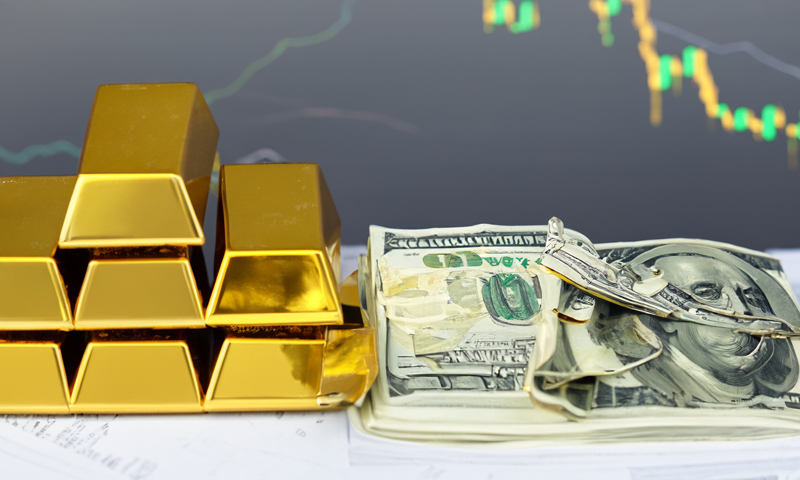
For cautious investors who rely on regular income streams to cover their expenses, this could be a decisive disadvantage. Precious metals essentially only need to be „stored“ in order to benefit from their value, but there is no way to participate in additional income through regular distributions.
2. Market Volatility and Price Fluctuations
Although gold and silver are traditionally considered safe havens, these precious metals are not entirely immune to market fluctuations either. Their prices can also fluctuate considerably, particularly during speculative movements or in times of increased demand. While the price of gold tends to be more stable when viewed over long periods of time, short-term price movements can also bring risky phases for investors.
For cautious investors who rely on stability and low fluctuations, the volatility of gold and silver can be perceived as a disadvantage. Especially in times when the market is very unpredictable, the decision to hold precious metals can be fraught with uncertainty.
3. Storage and Security
Precious metals need to be stored securely if you own them in physical form. This means either keeping them in a secure safe or using a bank vault, which incurs additional costs. If you want to store gold or silver at home, you also need to ensure that you take adequate security measures to prevent theft or loss.
These practical considerations are an additional obstacle for cautious investors who are concerned about their physical security. Storing precious metals brings additional costs and risks that should be taken into account when making a decision.
4. No Cash Flow or Value Growth Through Companies
Another disadvantage of precious metals is that they do not generate any economic activity. While companies can potentially offer increasing company values through their business activities, innovation and growth, the value of gold and silver remains „static“ as long as no extraordinary events influence the market.
For investors who wish to benefit from the appreciation in value of a company or a bond through steady profits or dividends, precious metals do not offer this possibility. In this respect, it can be difficult for cautious investors to benefit from potential value appreciation when markets are calm.
Conclusion: Are Precious Metals Suitable for Cautious Investors?
Investing in precious metals such as gold and silver can certainly be advantageous for cautious and risk-averse investors, especially when the focus is on long-term preservation of value and protection against inflation. Precious metals offer a degree of stability that is perceived as reassuring in times of economic uncertainty. However, they are not entirely free of risks. The volatility of prices, the lack of ongoing returns and the practical challenges of storage are not to be overlooked.
For those who pursue a conservative investment strategy and are primarily interested in the security of their capital, investing in precious metals can be a useful addition to a well-diversified portfolio. Nevertheless, anyone investing in precious metals should keep a close eye on the aforementioned disadvantages and their own investment goals. A thorough analysis and, where appropriate, consultation with a financial expert are in any case advisable in order to make an informed decision.
Comments 0
Write new comment: